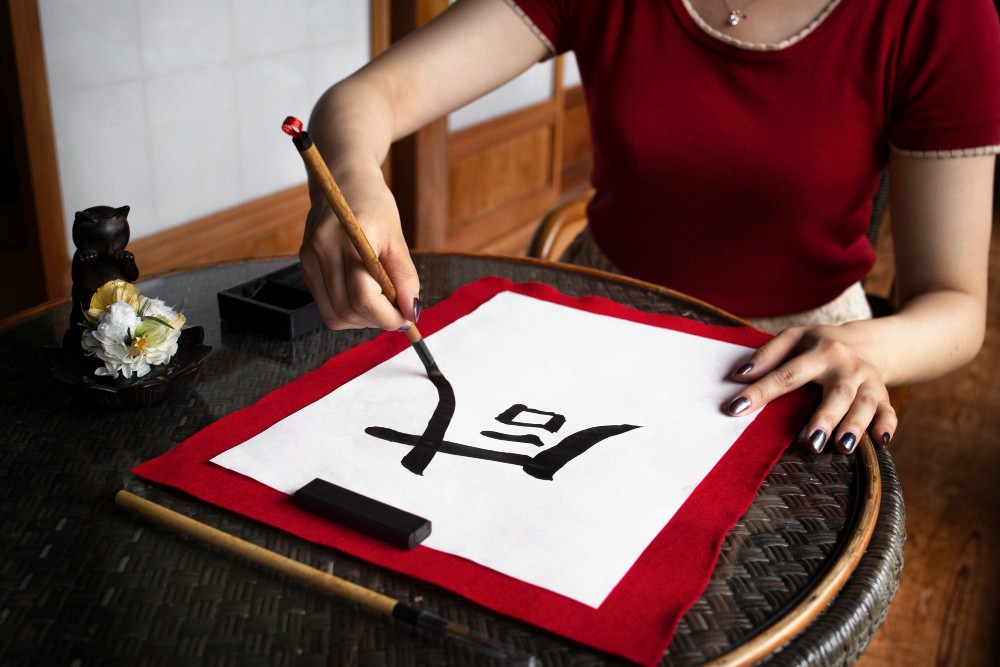
For many learners, Japanese kanji feels like the hardest part of mastering the language. With thousands of characters derived from Chinese, each with multiple readings and meanings, kanji can appear overwhelming at first. But don’t worry — with the right strategy, consistency, and mindset, you can make steady progress.
1. Learn Kanji with Radicals
Every kanji is built from smaller components called radicals. By learning common radicals, you can recognize patterns, meanings, and pronunciation clues. For instance, the radical 氵 often relates to water (e.g., 海 “sea,” 河 “river”). Mastering radicals builds a strong foundation for learning hundreds of kanji faster.
2. Use Mnemonics and Storytelling
Turn abstract characters into memorable stories. For example, the kanji for “rest” (休) combines the symbols for “person” (人) and “tree” (木) — imagine a person resting by a tree. Visual storytelling makes memorization enjoyable and effective.
3. Write It by Hand
Typing helps recognition, but writing kanji by hand reinforces muscle memory. Use a notebook to copy characters repeatedly while saying their meanings aloud — this activates multiple parts of your brain and strengthens recall.
4. Use Digital Tools
Apps like WaniKani, Anki, or Kanji Study allow you to review kanji efficiently using spaced repetition (SRS). Spending just 10–15 minutes daily can lead to long-term retention.
5. Read Often
Immerse yourself in authentic materials — manga, news articles, or graded readers. Even if you don’t understand every character, exposure helps recognition and contextual learning.
Conclusion
Kanji isn’t about memorizing thousands of shapes — it’s about building connections and patterns. With patience, structure, and consistent exposure, you’ll transform confusion into confidence.