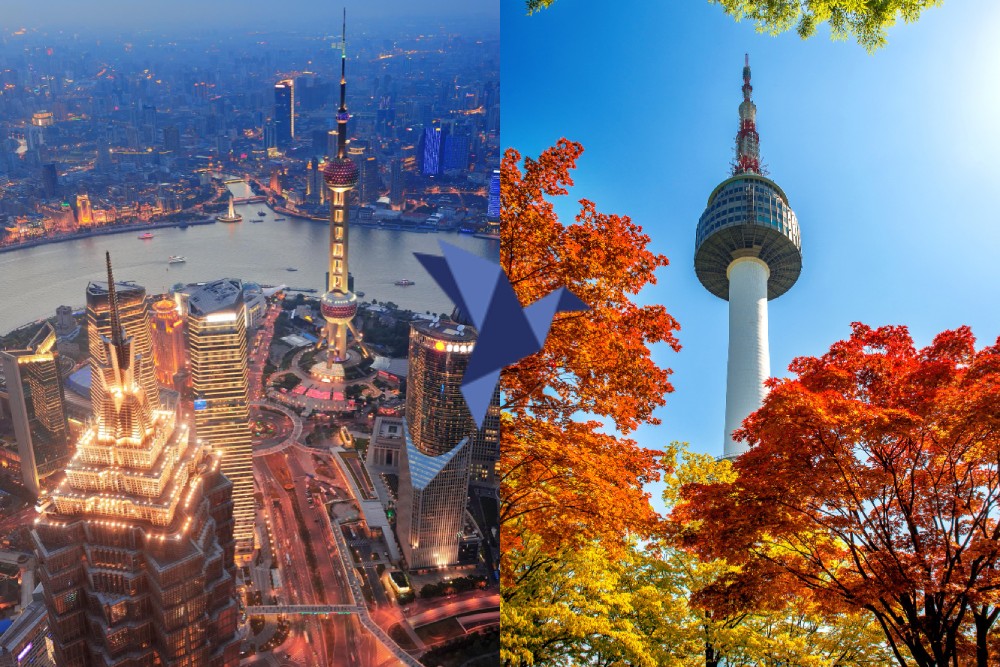
One of the most exciting parts of learning a new language is exploring its culture and traditions. For students of Chinese and Korean, festivals provide a direct connection to each country’s history, values, and community spirit.
At La Maison d’Asie, we encourage students to embrace festivals as learning opportunities — where language meets life.
China’s Most Celebrated Festivals
Chinese New Year (Spring Festival):
The grandest celebration of the year, marked by fireworks, red lanterns, and family reunions. Vocabulary like “xīnnián kuàilè” (Happy New Year) comes alive during this holiday.
Dragon Boat Festival:
Held in June, this event honors poet Qu Yuan. Locals race boats shaped like dragons and enjoy sticky rice dumplings (zòngzi).
Mid-Autumn Festival:
Celebrated under a full moon, families exchange mooncakes and recite poems — a perfect time to learn expressions about family and gratitude.
Korea’s Rich Cultural Traditions
Chuseok (Harvest Festival):
Known as the “Korean Thanksgiving,” it’s a time for ancestral rituals, food sharing, and wearing hanbok.
Seollal (Korean New Year):
Families play traditional games, eat tteokguk (rice cake soup), and share blessings for the year ahead.
Boryeong Mud Festival:
A more modern festival that attracts visitors from around the world — a symbol of fun, youth, and cultural openness.
Cultural Festivals and Language Learning
By attending or studying these festivals, learners encounter real-life conversations, songs, and traditions. It’s an immersive, joyful way to strengthen listening and speaking skills while gaining cultural awareness.